
You can spend a lot of money on advertising without learning very much.
An ad goes live. People click. A few enquiries come in. Someone decides the creative looks good, and the campaign keeps running. But could a different message have brought in twice as many customers for the same budget?
That was the question behind a recent workshop our team at Nomadic Advertising had about Claude Hopkins’ Scientific Advertising. Published in 1923, the book describes a way of thinking that still has a place in how businesses approach marketing today.
The tools have changed. The need to understand what makes someone buy, measure the response and test before scaling is still there.
Start With the Business Result
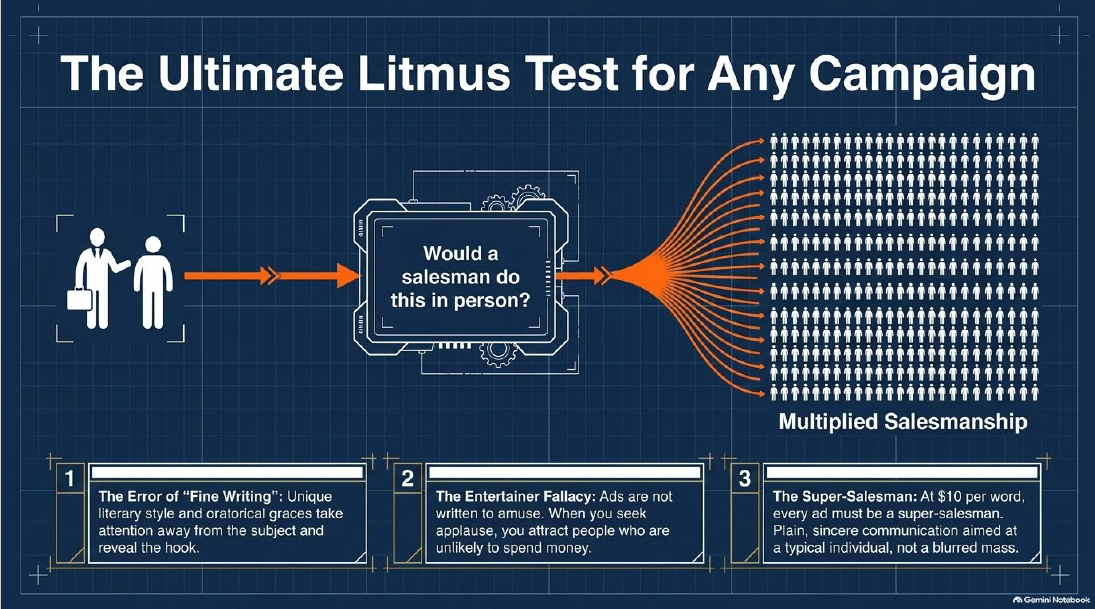
Hopkins built his approach around a straightforward principle: advertising should produce sales.
I think that is a useful starting point for any business spending money to grow. Before judging a campaign, decide what you need it to accomplish. For a service business, that might mean qualified enquiries that become paying clients. For an online store, it might mean purchases at a profitable acquisition cost.
Clicks and impressions can help explain what happened. They cannot, by themselves, tell you whether the investment was worthwhile.
There is also a limit to taking Hopkins literally. Brand building matters, and its effects can take longer to show up. My takeaway is that you should understand the job each campaign is doing and how you will evaluate it.
Your Favourite Ad Might Be the Expensive One
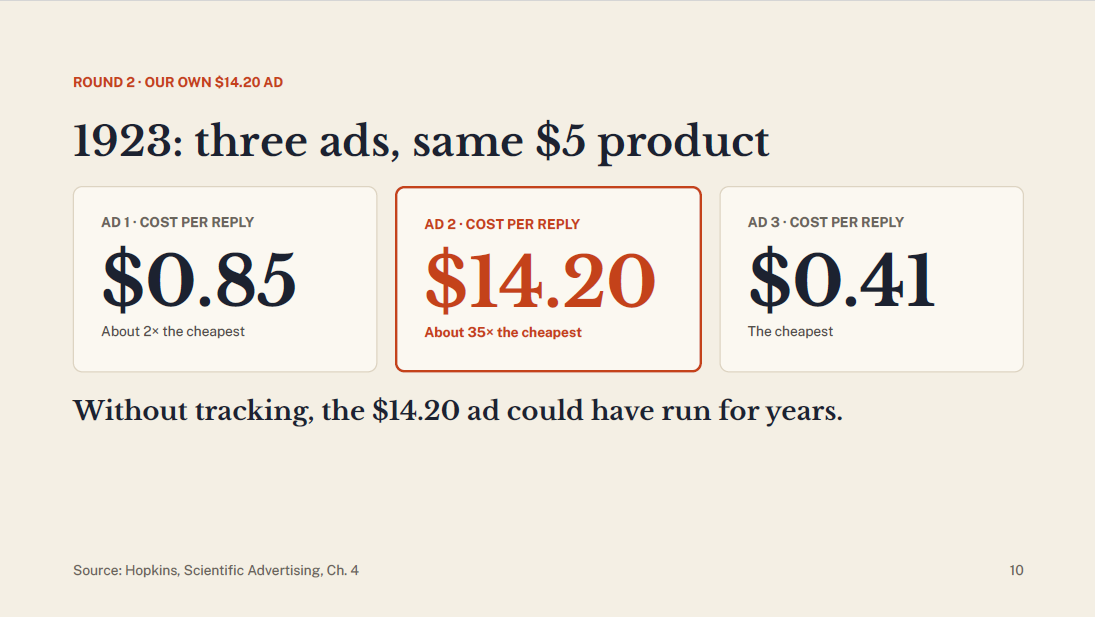
One example in the presentation compared three ads for the same $5 product. Hopkins reported costs per reply of $0.85, $14.20 and $0.41.
Imagine choosing the $14.20 version because everyone in the room liked it. Without tracking, you might never discover how much more each response was costing you.
We looked at a more recent example from a Kodak Lens campaign during the talk. One ad generated leads at approximately $35 each, while another generated them at approximately $69.
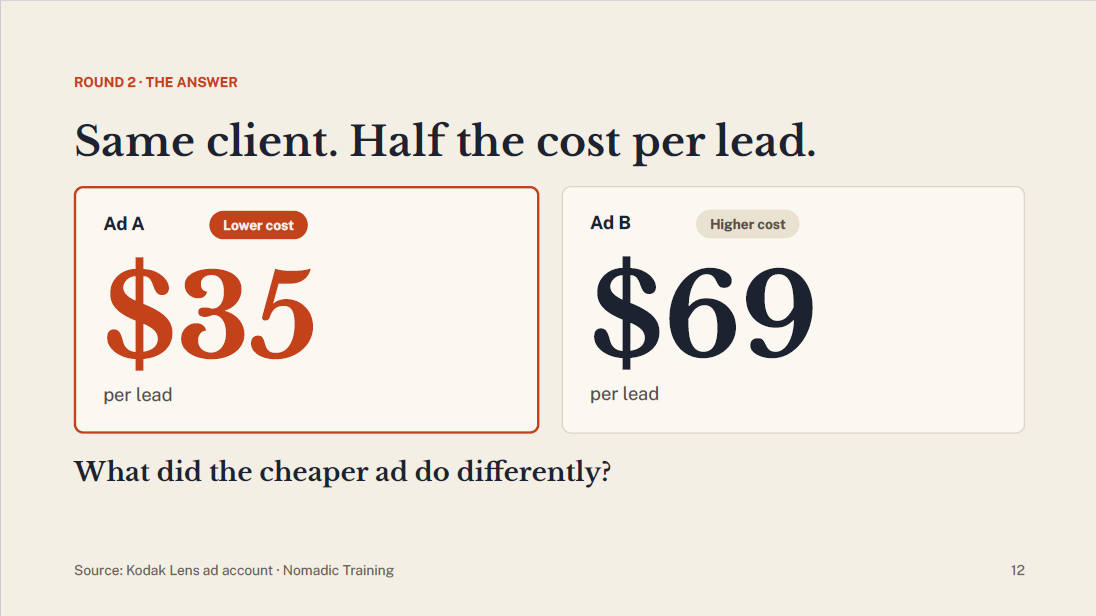
At those costs, a $1,000 budget would produce roughly 28 leads from one version and 14 from the other. The difference is meaningful before you spend another dollar.
But leads are only part of the picture. You also need to know which enquiries become appointments and customers. An ad that attracts cheaper leads deserves attention, but lead quality and sales results determine whether it deserves more budget.
That is why I want creative decisions connected to business outcomes. Personal preference gives you something to test. Results give you something to act on.
Your Biggest Competitor Could Be Doing Nothing
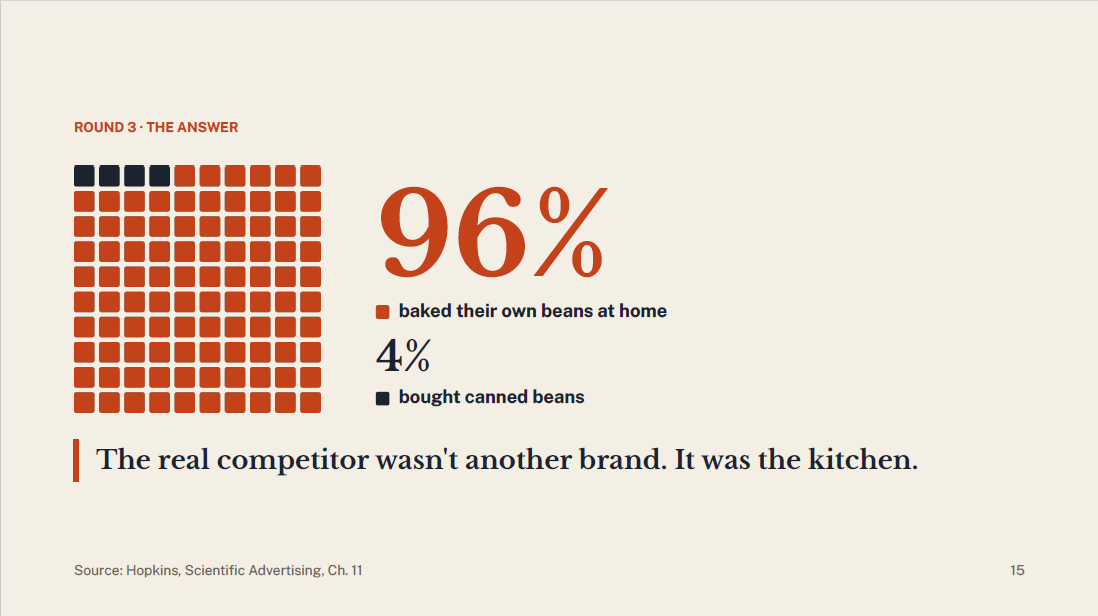
One of the most useful stories in the presentation involved canned pork and beans.
Instead of immediately writing about why one brand was better than another, Hopkins researched how households actually prepared the food. In his account, 96% baked their own beans, while only 4% bought canned beans.
That changes the advertising problem. Most potential customers first needed a reason to buy the category at all.
The same question is useful for service businesses. Is an eye clinic competing with another clinic, or with someone postponing an exam? Is a dentist losing an appointment to another practice, or to a patient who feels anxious about booking?
Those were open questions in the talk. They need research before they become campaign assumptions.
Ask customers what delayed their decision, what concerned them and what finally prompted them to act. Their answers can reveal a more persuasive message than another comparison with the business down the street.
Specific Facts Give People Something to Believe
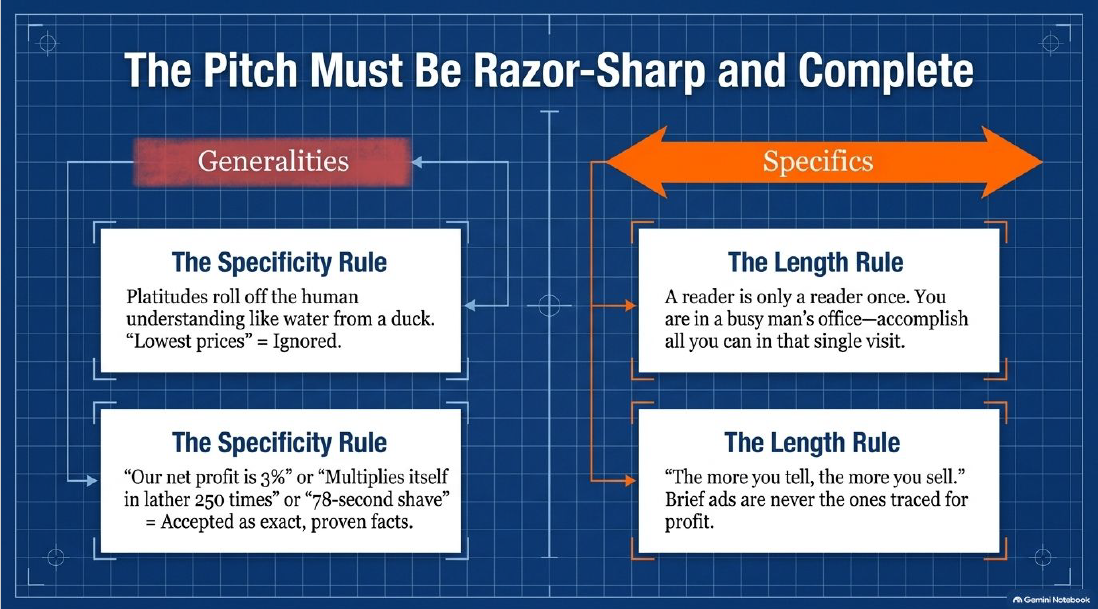
Generic claims are easy to write. “Great service.” “High quality.” “The best solution.”
They also leave the customer with very little to evaluate.
The presentation explored how Hopkins used research and specific product details to explain why an offer deserved attention. The useful principle is to replace vague praise with evidence a customer can understand.
For a service business, that could mean explaining what happens during the first appointment, what a quoted price includes or how a particular process works.
For example, “We keep you informed” becomes more concrete when you explain when updates are provided and who the customer can contact with questions.
The details must be accurate. A precise claim still needs proof. Start with what the business actually does, then explain why that matters to the person buying.
Give Interested Buyers Enough Information
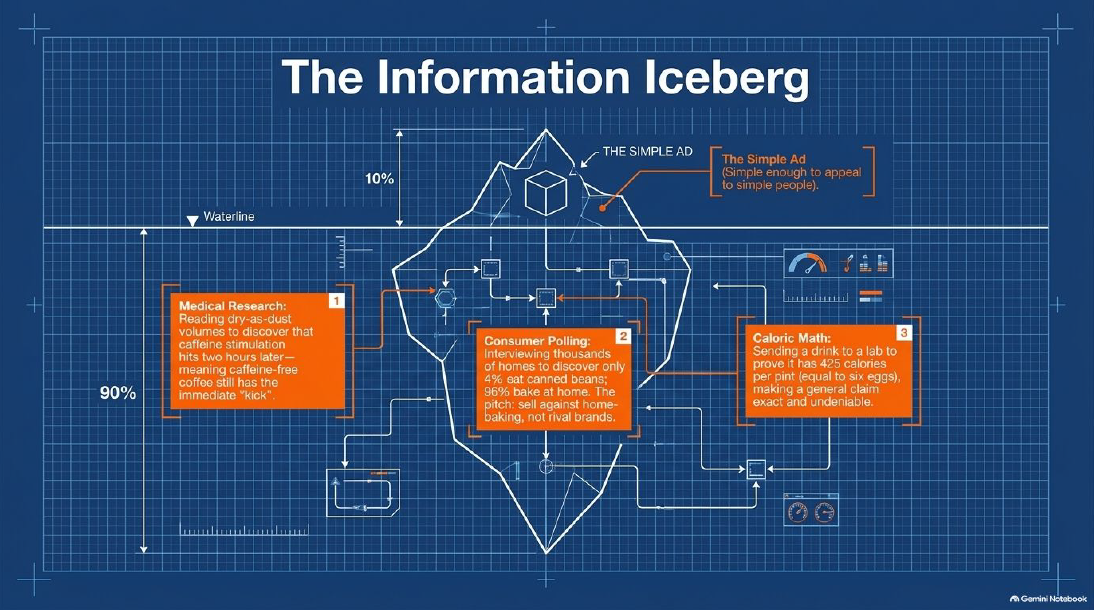
Ad length came up during the talk because businesses often assume shorter copy will always perform better.
Hopkins argued for giving interested buyers enough information to make a decision. I think that is the more useful question: what does this customer need to understand before taking the next step?
A straightforward purchase may need very little explanation. A costly or unfamiliar service may need more context about the process, price, risks and expected outcome.
Long copy can work when it answers real questions. Extra words that repeat the same promise do not help.
The presentation also challenged the assumption that adding images automatically improves an ad. In Hopkins’ incubator example, making the ad larger to accommodate pictures increased its cost without increasing sales.
Images should earn their place by helping people notice, understand or trust the offer. On social media, attracting attention can be an essential part of that job.
Test Before You Commit the Whole Budget
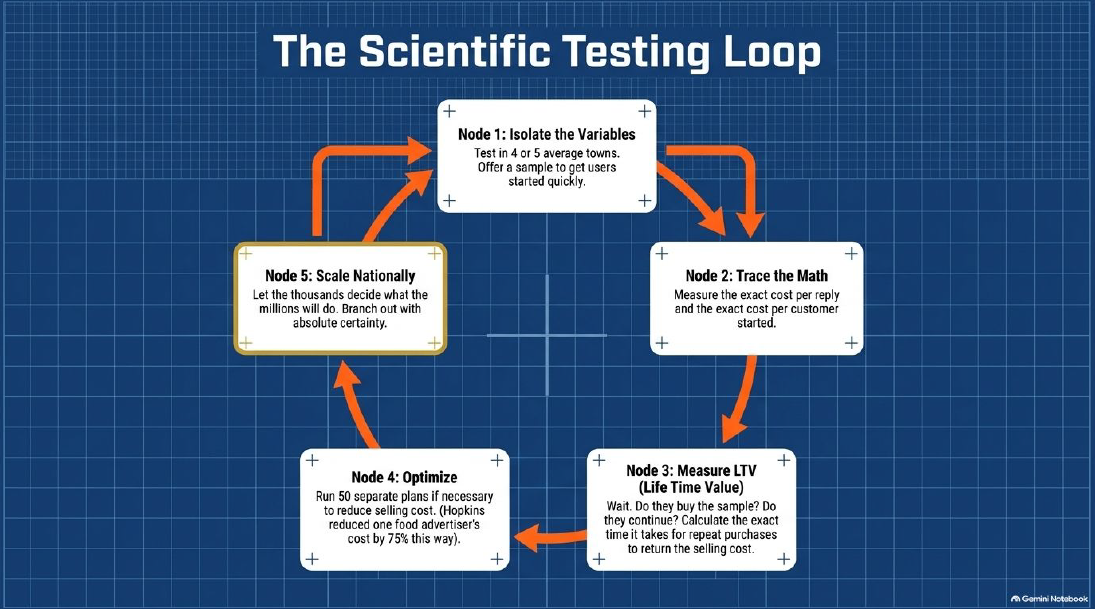
Hopkins tested campaigns in smaller markets before expanding them. The business logic is still useful: learn on a manageable budget before making a larger commitment.
A practical test starts with a clear question. Does explaining the process generate more qualified enquiries than leading with price? Does addressing a common concern improve response?
Give the test a defined outcome, keep the comparison as fair as possible and allow enough results to make a useful decision. A handful of clicks is a weak basis for committing the rest of your budget.
You should also write down what the test taught you. Over time, those findings can improve your website, sales conversations and future campaigns.
Make Your Next Campaign Teach You Something
What I like about Scientific Advertising is the discipline it brings to decisions that can otherwise become subjective.
You do not need to copy every recommendation from 1923. You can carry forward the habit of researching customers, making clear claims, measuring results and testing ideas before scaling them.
Before your next campaign, ask yourself:
- What business outcome am I trying to produce?
- What customer concern does this message address?
- What evidence supports the promise?
- How will I know whether another approach performs better?
If those questions are difficult to answer, that is a useful place to start. If you want help connecting your advertising to measurable business growth, get in touch with me. We can look at what you are running, what you are tracking and what is worth testing next.