Google just dropped a massive collection of holiday updates. If you read the headlines, it looks like a fun bag of tricks for consumers—Gemini planning parties, easier photo editing, and smarter maps.
But when you strip away the consumer-facing hype, there is a distinct message for business leaders: The way customers find and buy from you is becoming automated.
We are moving rapidly toward an "agentic" economy. This means AI isn’t just searching for products; it’s acting as the concierge, the researcher, and increasingly, the buyer. If your digital foundation isn’t solid, you won’t just miss a click—you’ll be invisible to the machine that brings you the customer.
Here is the unvarnished truth about what these updates mean for your bottom line and the actionable blueprint to capitalize on them.
1. The Rise of "Agentic" Commerce
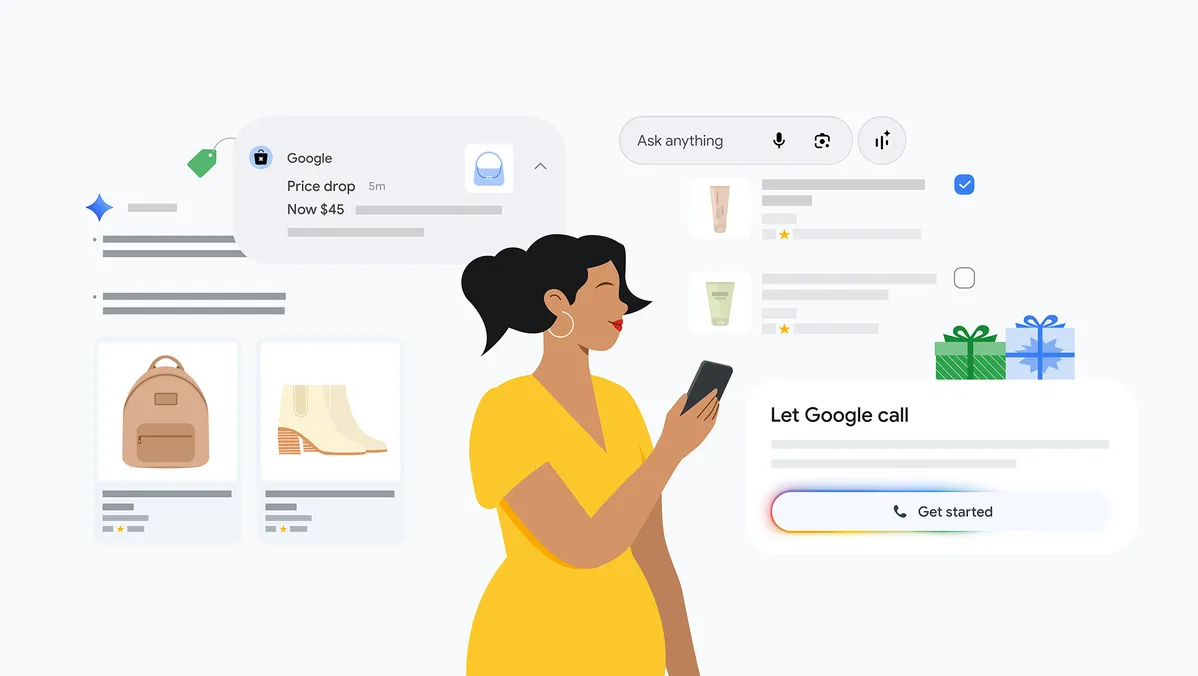
Google is rolling out what they call "Agentic Checkout" and "Agentic Calling." In plain English? The AI does the heavy lifting. A user can find a product and let the AI handle the checkout process, or even have Google call a business to check inventory or hours.
This changes the ROI equation. You are no longer just marketing to a human; you are auditing for an algorithm. If your checkout flow is friction-heavy or your inventory data isn’t structured so a bot can read it, the AI will bypass you for a competitor who makes its job easier.
The Blueprint:
- Audit your Product Feed: Ensure your Merchant Center data is pristine. The AI needs to see stock levels, shipping times, and variants clearly.
- Reduce Friction: If your checkout process requires five clicks and a popup dismissal, you’re losing the automated sale. Streamline it.
2. Zero-Click Search is the New Standard
With updates to Gemini regarding holiday planning and gift ideas, users are getting answers directly in the interface. They aren’t clicking ten links to find a "dinner party guide." Gemini builds the plan for them.
This is the Zero-Click reality I’ve warned about. Traditional traffic metrics might dip, but this isn’t a failure—it’s a shift. Ranking now means being the entity that Google’s AI trusts enough to cite as the answer.
The Action Plan:
- Optimize for Entities, Not Keywords: Stop stuffing keywords. Build content that establishes your brand as the authority on specific topics (e.g., "Sustainable Holiday Hosting").
- Become the Source: Ensure your site provides the direct, data-rich answers AI is scraping for.

3. Local SEO: The Digital Storefront
Google Maps is integrating more specific data about store traffic, holiday hours, and product availability. For my partners with physical footprints, this is critical.
If a customer asks Gemini, "Where can I buy a vintage wine near me open right now?" and your Google Business Profile hasn’t been updated with holiday hours, you do not exist in that transaction.
The Fix:
- Update Everything: Go the extra mile. Update special holiday hours, specific holiday inventory, and service options immediately.
- Visual Search: Google is leaning heavily on visuals. Upload high-quality photos of your storefront and holiday stock. The AI analyzes these images to match user intent.
Sustainable Growth Over Hype
These updates aren’t magic. They are tools. The businesses that treat SEO as a long-term asset—building clean data, authoritative content, and seamless user experiences—will see their ROI compound.
Those chasing vanity metrics or trying to "hack" the algorithm will be left behind by the agentic shift.
We need to stay ahead of this. If you want to ensure your infrastructure is ready for the AI holiday rush, reach out to me and let’s get the ball rolling.